 English
 Indian
 العربية
 Español
 Deutsch
 Türkçe
 Русский
 Français (Afrique)

ALG : Réparer les bizarreries de Petkovic !
Passée l’onde de choc de voir une sélection mondialiste confiée à un parfait inconnu du coaching en haut niveau, il est désormais attendu de Brahim Hemdani une rupture totale avec les bizarreries de l’ère Petkovic.
Maintenant que la Fédération a assumé son choix très risqué de promouvoir l’ancien international (4 capes) à la tête de l’EN, il faudra encore patienter quelques jours pour entrevoir les préceptes sur lesquels le récent vainqueur du tournoi méditerranéen compte s’appuyer pour rebooster une sélection qui a signé des prestations en demi-teinte en Amérique du Nord. Il ne faudrait, toutefois, aucunement s’attendre à une révolution ou une remise en question collective d’une partie du groupe qui a traversé l’Atlantique cet été, mais plutôt voire comment sera son premier onze, de manière à y lire des décisions fortes ou un choix de continuité.
Premier constat et non des moindres, le duo Brahim Hemdani-Antar Yahia sera allégé du poids d’une éventuelle polémique à venir avec la retraite sportive du capitaine Riyad Mahrez qu’il ne sera, donc, pas «contraint» de sélectionner sur l’autel de la légitimité historique en ce moment précis où il est encore sans club. extract-html.com
Déjà allégé du poids de la légitimité
De même pour son lieutenant et recordman des capes, Aïssa Mandi dont les dernières prestations sous le maillot vert lui ont valu beaucoup plus de critiques acerbes que d’applaudissements nourris. L’ancien milieu de terrain de l’Olympique de Marseille aura, en revanche, la responsabilité de mettre fin à cette étrange manie qu’avait son prédécesseur de mettre en opposition sa théorie et sa pratique à chaque fois qu’il s’agissait de dresser une liste. La manière avec laquelle il avait géré la question du gardien titulaire, aussi bien à la CAN au Maroc qu’à la Coupe du Monde en Amérique en demeure un parfait exemple, tout comme ses essais empiriques dans l’entrejeu à contre sens de la logique sportive du moment. De Hemdani, il sera donc attendu une plus juste application de la méritocratie au moment d’adresser des convocations.
Méritocratie vs bricolage tactique
Une méritocratie encore plus exigeante est aussi et surtout espérée à l’instant de cocher les noms des titulaires sur la feuille de match, quitte à ne s’embarrasser d’aucune pseudo-légitimité diachronique ou de représailles extra-sportives au parfum de vendetta post-électorale. Outre la forme qu’il compte donner à son groupe, l’ancien entraîneur de Courbevoie sera, également, scruté sur le fond de jeu et ses capacités à doter son équipe d’un circuit préférentiel qui coupera les ponts avec l’instabilité chronique que se plaisait à bricoler Vladimir Petkovic sur le plan tactique. Le programme condensé de l’équipe nationale à la rentrée avec ces éliminatoires de la Coupe d’Afrique des Nations 2027 calées entre septembre et novembre lui offrira, à ce propos, un cadre temporel à répétition.
Un guide du «sélectionneur débutant» à enrichir
Il pourra clairement s’exprimer par les actes, tout autant que la modestie du calibre des adversaires (classés entre la 90e et la 142e places mondiales) lui permettra de donner naissance à un véritable projet de jeu sans vraiment se soucier des conséquences sur le résultat étant donné qu’une place parmi les deux premiers de cette modeste poule 1 paraît tout à fait à la portée d’une sélection algérienne qui fait partie du top-5 africain et tape aux portes du top-30 planétaire (29e au dernier classement FIFA).
Une meilleure lecture du contexte, une plus fréquente visibilité au niveau local, une loquacité davantage axée sur l’essentiel et la pertinence au détriment des banalités et autres formules en bois cramé ainsi qu’une moindre tendance à fuir le large public via les médias seront, à n’en pas douter, de précieux atouts que Brahim Hemdani gagnerait (énormément) à inclure dans son manuel du «sélectionneur débutant», question de faire dans le bon sens et d’éviter la faillite comportementale du début de l’ère Petkovic.
-RACHID BELARBI
L’article ALG : Réparer les bizarreries de Petkovic ! est apparu en premier sur Foot Afrique.
Esports players know how to compete, but esports orgs need to teach them how to behave
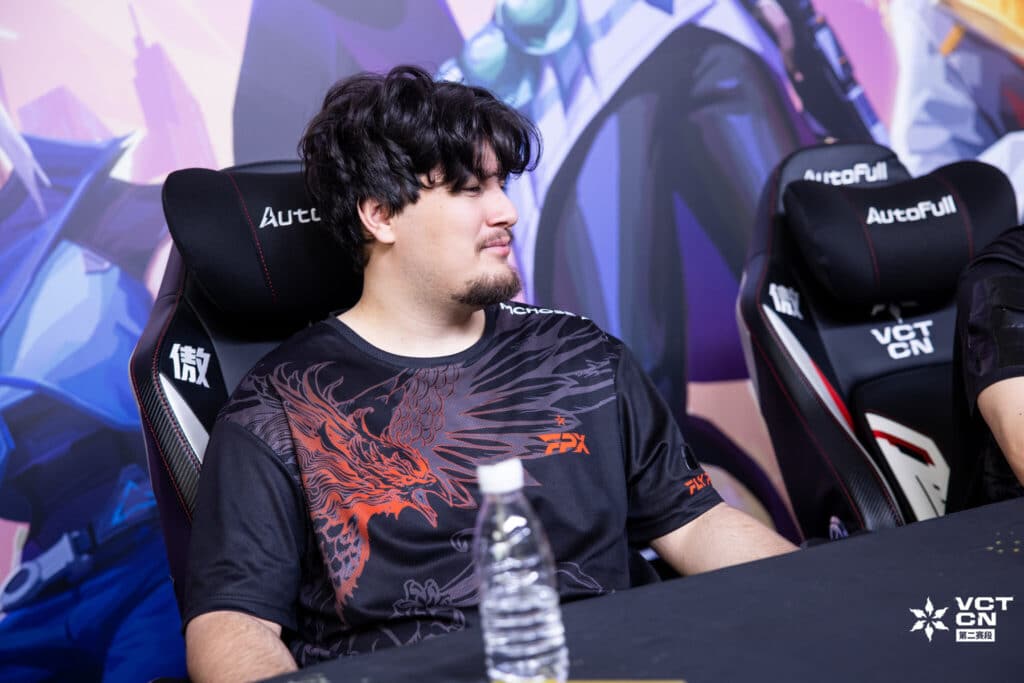
On August 28th, VCT China organization FunPlus Phoenix issued a statement announcing that it had “terminated all cooperation” with its IGL and controller, Blendi “kovaQ” Kovaci. According to FPX, the player made “inappropriate remarks while communicating with teammates during a game.”
As a result, the organization launched an internal investigation in cooperation with Riot Games before cutting ties with him. In the meantime, FPX has said it will strengthen its internal management and player education, while expressing regret for the negative impact of kovaQ’s actions.
“We will complete the necessary arrangements for upcoming competitions in accordance with the league’s final decision and regulations,” the organization stated.
The incident, however, is part of a recurring pattern in esports. While team members are expected to maintain professional conduct on stage, they sometimes fail to uphold those same standards in real life.
The result? One moment of poor judgment can end up leading to roster cuts, suspensions, lost sponsorships and, in some cases, the end of a career.
After that, the player is often left with nothing but regret, something that can also be seen in kovaQ’s statement:
“Hello everyone, I wanted to apologize for what I wrote. I sent something to my teammate that was inappropriate towards a lot of people. In that moment, I meant it as a joke, but looking back at it, I deeply regret ever writing it.
“I made a mistake that I shouldn’t have made, and I take full responsibility for it. Thanks to FPX for the opportunity to be part of this project and for everything you’ve done for me,” he added.
And every time something similar happens, one question comes to mind: Why does the esports industry still struggle to give enough importance to consistent PR and professional conduct training?
Esports organizations have been overlooking PR training
In esports, players are competitors, entertainers, streamers, influencers, brand ambassadors, and the public faces of the organizations they represent.
Yet, while teams invest heavily in coaches, analysts, performance staff, and training facilities, one very important area still receives little attention: public relations and communications training.
As a result, we have seen multiple players and organizations face serious consequences. In 2023, Japanese VALORANT player Kim “TenTen” Tae-young was fired by NORTHEPTION after he made racist remarks during a ranked match. Riot Games later suspended him for four VCT matches.
Overwatch League player Park “Viol2t” Min-ki was fined and suspended by the San Francisco Shock in 2020 for repeated use of toxic slurs on stream.
Let’s also not forget the massive loss Team Liquid faced after Honda terminated its six-year sponsorship following an inappropriate post by its Rainbow Six player Lucas “DiasLucasBr” Dias, which was insensitive towards Japanese players.

I have sometimes personally seen players behave disrespectfully towards journalists during press conferences. I remember one player calling a fellow journalist’s question “dumb” in a particularly rude tone in front of everyone, then refused to answer it, even though the question itself was logical and not even critical.
Now, some might argue that this is simply the result of the pressure that comes with losing. But let me remind you, players do have the choice to decline press conferences and interview appearances if they are not ready to face the media.
Gamer to professional player: the sudden shift
The thing is, esports players often enter professional play at a young age (which makes sense in a profession where the mid-30s are considered old). Moreover, many have spent most of their time on PCs, communicating with others through Discord, streams, and social media platforms rather than socializing in traditional ways.
Then, as they transition into professional esports, the shift can be incredibly abrupt.
On top of that, multiple esports organizations still prioritize mechanical skill, game knowledge, and results above almost everything else. Soft skills such as communication and behavior often come second. As a result, their PR team only begins working after something has already happened and the community becomes angry.
Basically, a player who was just a normal teenager playing ranked games in their bedroom is suddenly representing an organization in front of thousands of fans.
Not only that, but they are expected to conduct interviews, appear on broadcasts, livestream regularly, remain active on social media, and fulfill sponsorship deals, often with little to no preparation.
That creates an obvious problem because players are used to the constant toxicity and unfiltered communication of competitive games. Thus, being good at an esports title does not automatically make someone good at professional communication.
However, that doesn’t mean these skills cannot be taught.
Players need guidance, not just punishment
Inappropriate behavior by one team member not only hurts the person involved; it can affect everyone around them. Sponsors, for instance, don’t just want numbers, but also want to build meaningful connections with the community, making the public image of both players and organizations even more crucial.
In addition, especially in the digital world, one small mistake or controversy can go viral almost instantly, with the recent incident involving Hector “FrosT” Rosario and Global Esports being a good example of this.
I am not saying organizations need to set up extensive programs like those in traditional sports. They can simply hold regular training sessions covering multiple areas, including handling criticism, knowing when to respond publicly or remain silent, crisis communication, and more.
Some progress is already being made in this area. Clauses related to professional codes of conduct are now a part of the contracts, tournament organizers actively punish breaches of those rules, and multiple organizations work with sports psychologists to support players and staff.
However, one very important thing that needs to be kept in mind is that the goal should be to help players develop empathy, take genuine accountability, understand where they went wrong, and avoid repeating the same mistakes.
In short, PR training should not be designed to make esports players behave like traditional athletes and instead should be viewed as career protection.
Of course, this doesn’t mean team members shouldn’t engage in banter, as that’s the heart of esports. The goal is to help them understand the fine line between healthy, harmless banter and outright disrespect.
FPX and kovaQ’s incident is another reminder to the esports industry that skill alone is not enough. Unless organizations take PR and professional conduct training seriously, we may only be weeks or months away from another contract termination, suspension, or controversy.
The post Esports players know how to compete, but esports orgs need to teach them how to behave appeared first on Esports Insider.
Serie A : La Lazio renverse l’Udinese
La Lazio continue son impressionnant début de saison. Opposés à l’Udinese ce lundi soir lors de la 3e journée de Serie A, les Biancocelesti ont signé une troisième victoire consécutive (2-1), au terme d’une rencontre longtemps mal engagée.
Les hommes de Gennaro Gattuso ont pourtant été surpris peu après le retour des vestiaires. À la 49e minute, Jesper Karlström a profité d’une passe de Keinan Davis pour ouvrir le score et placer les locaux en position favorable.
Menée au score, la Lazio a progressivement accentué la pression. Ses efforts ont fini par payer dans le dernier quart d’heure. À la 75e minute, Davide Frattesi a remis les deux équipes à égalité sur un service de Mattia Zaccagni.
Le scénario a ensuite complètement basculé dans les dernières minutes. Entré en jeu à la 80e minute à la place de Frattesi, Albert Gudmundsson n’a pas tardé à se montrer décisif. À la 88e minute, l’Islandais a inscrit le but de la victoire, permettant à la Lazio de réaliser un spectaculaire retournement de situation.
Avec ce nouveau succès, la Lazio conserve donc un bilan parfait après trois journées et affiche neuf points au compteur. Les Biancocelesti restent ainsi au contact de la Roma et de l’Inter Milan, également créditées de neuf unités.
The post Serie A : La Lazio renverse l’Udinese appeared first on AfricaFootUnited.
Rassie: We’ll really miss our home support
Rassie Erasmus has highlighted the Springboks’ previous experience of playing the All Blacks on neutral ground and their determination to play for the fans back home. SIMON BORCHARDT reports.
The world champions head into the Rugby’s Greatest Rivalry series decider with a 2-1 lead after beating the All Blacks in front of almost 86,000 fans at FNB Stadium in the third Test.
However, the fourth and final Test will take place on American soil at the 71,000-capacity M&T Bank Stadium in Baltimore.
EXPLAINED: Why Rugby’s Greatest Rivalry ends in USA
Erasmus’ Boks are no strangers to facing the All Blacks on neutral ground.
During the lockdown-hit 2021 Rugby Championship, the Boks played the All Blacks twice in Australia, suffering a 19-17 defeat in Townsville before bouncing back to win the second encounter 31-29 on the Gold Coast.
Those Tests came after the Boks had beaten the British & Irish Lions 2-1 in a home series played behind closed doors due to lockdown restrictions.
The Boks then thrashed the All Blacks 35-7 in a 2023 World Cup warm-up match at Twickenham before edging their arch-rivals 12-11 in the World Cup final at the Stade de France.
TEAM: Boks back Krappie for Baltimore decider
Asked about facing the All Blacks in Baltimore, Erasmus said the rugby field remained the same.
“Neutral ground is still 70m by 100m. I guess it’s going to be a good crowd. The only thing that we’ll really miss is our home support, and [the All Blacks] will also miss their home support.
“We have played them on neutral ground many times, at World Cups, at Twickenham – pool matches, World Cup semi-finals, finals and things like that. So it’s going to be a hell of a match.”
MORE: Why Sacha starts, Manie benched again
The change in atmosphere will be significant after the emotional scenes at FNB Stadium, but Erasmus said the Boks have plenty of experience to draw on when it comes to finding motivation without their fans in the stands.
“We played a British & Irish Lions series in front of no crowds in South Africa, when we were 1-0 down. We’ve played in Covid times in the Rugby Championship in Australia when there were almost no South Africans there because you couldn’t get out of the country.
“So we try to remind ourselves a lot of that.
ALSO: 42 wins in 49 Tests – These Springboks are simply relentless
“The big thing is, although the people are not here – and New Zealand are in the same boat, their people are also not here – we’ve had this experience many times against New Zealand, and many times we’ve been on the losing side.
“But our motivation is never about something else.
“We saw last weekend again how South Africa supports us. After the first one we lost, some people turned against you, but the majority stayed positive and supported.
“We remember those things and we’re obviously going to play for them.”
MORE: Record-breaking Kolisi leads Springboks to promised land
The post Rassie: We’ll really miss our home support appeared first on SA Rugby magazine.